FIRE Conference Thought Leadership Article
Category:
Insights
Author:
Tom Mason
It’s November 2026. How has that happened?! For me that means 24 years in the fire safety industry, having started my career as a graduate fire engineer in October 2002. I have engineers in my team that weren’t born then, and that’s a great reminder to me about where I started, the path I’ve taken to get where I am today, and the steps I still have to take in the future as I continue to develop.
When I started out in my role, fire engineering-based degrees were still relatively new. The engineers I learned from had arrived through a variety of routes, including building control, architecture and manufacturers. I also learned from specialists such as Peter Jackman, whose work included designing test procedures and laboratories. As a graduate, I had a university degree, but the engineers I worked with knew far more than I did. They had built their knowledge of fire engineering through experience and training.
Fire engineering is one of those industries where no single person can know everything there is to know. The more I’ve learned over the years, the more I’ve realised I don’t know - and there’s always more to learn. This means it’s a team game. We need to work together to push the ball forward and improve fire safety for everyone – that’s why we’re here, right?
This means sharing knowledge and experience at a team level, a company level and an industry level. We’re in competition to some extent, but fire safety progression is the real goal we’re all focussed on, and collaboration is a crucial component in getting us there.
Recently, there has been a bigger focus on the competency of fire engineers… and with good reason. Everyone needs to be suitably competent to do the job in hand. But is there a risk that if we focus too strongly on ticking the right boxes on the competency questionnaires, we take our eye off the bigger picture?
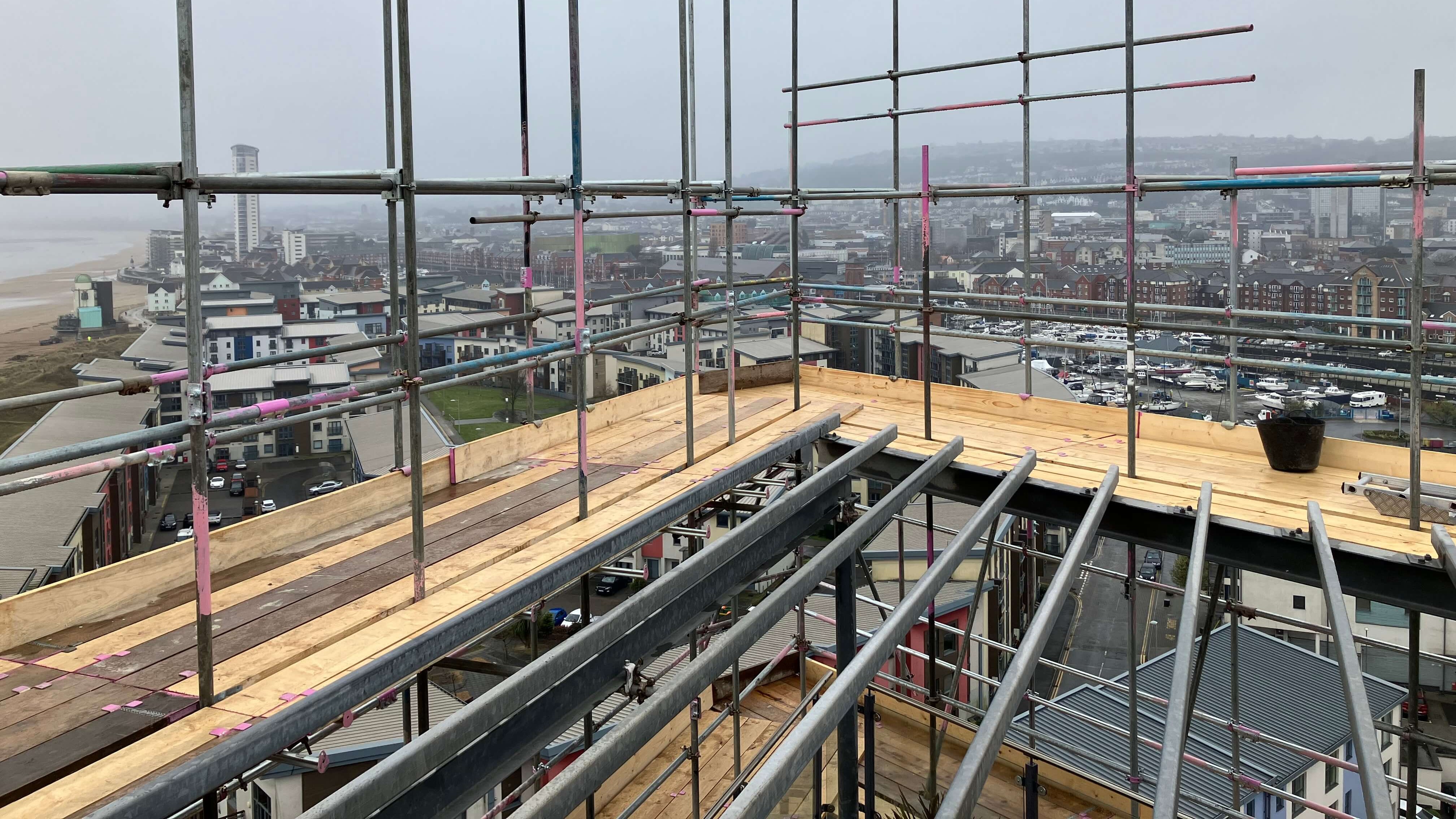
Experience means learning ‘on the job’ and asking questions about what we see. On site, climbing a scaffold tower lets us see the detail from an architect’s drawing in three dimensions, playing its part in the building’s construction. Witnessing a fire test raises different questions: will that manufacturer’s glazed door-set achieve 60 minutes? How does the laboratory operate, and what can we observe? Tagging along on a fire risk assessment brings another perspective: what are we looking for, and how does it reflect against current standards? Seeing it for yourself, first-hand, is a powerful learning tool.

I was lucky enough to have these experiences - and more - as I moved slowly through the ranks of engineering, each step earned by the knowledge I gained along the way.
Fire engineering is a multi-faceted discipline. Fire strategies need to be written, CFD analysis needs to be completed, Teams meetings need to be attended. But as we carry out these various, necessary aspects of the job, let’s not forget to get out there in the real world too. The real world is unpredictable, changeable, and it’s affected by the people in it and the conditions of the day or the month or the year. Working in the real world forces us to apply knowledge in unpredictable, dynamic environments. It encourages us to think differently, to connect abstract technical ideas we’ve seen on a page, with a real, lived-in environment. There is no substitute for it.
We, the ‘older’ generation of engineers, need to remember the value of experience and how it shaped us as we moved though our careers. We need to make time to teach the junior members in our teams. We need to facilitate working environments that allow them to adapt and learn about their environment, just as we did. Let’s not get too distracted by professional progression and ‘box-ticking’ on competency questionnaires as the only meaningful measurement of our work, let’s ensure we’re investing enough time ‘on the job’ learning the trade, broadening our knowledge and getting the experience we need to be competent fire engineers.